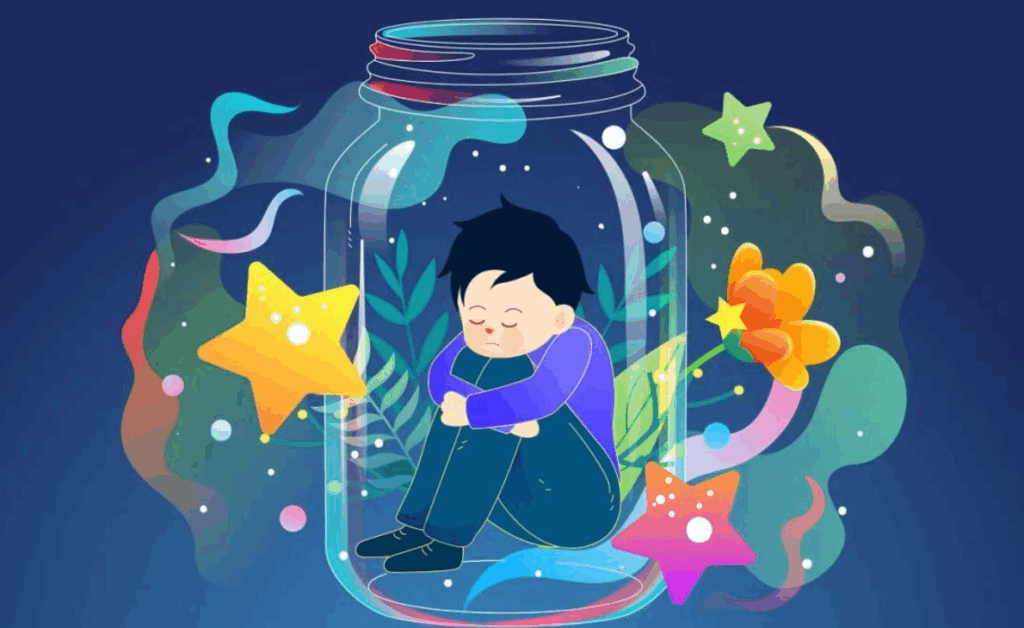
There is a group of children who have clear eyes but are unwilling to make eye contact with others; they are taciturn and always immersed in their own world. They are like stars in the sky, twinkling alone in the distant and dark night sky. They are autistic children, also known as “star children.”
1. What is Autism
Autism Spectrum Disorder (ASD), also known as autism, is a neurodevelopmental disorder that usually manifests in early childhood (before the age of 2-3 years). It is a “spectrum disorder”, which means that patients have very different symptoms, abilities and needs – some may need lifelong support, while others may excel in certain areas.
- Core features (according to DSM-5 criteria):
- Social communication disorders:
- Difficulty understanding other people’s emotions or body language, lack of eye contact.
- Speech delays, or use of repetitive language (such as saying the same sentence over and over).
- Lack of interest in sharing interests or emotional interaction.
- Stereotyped behaviors and narrow interests:
- Sticking to a fixed daily routine and resisting change (such as routes, eating)
- Repetitive movements (such as rocking the body, clapping hands).
- Showing unusually strong focus on certain topics or objects (such as numbers, maps, spinning objects).
2. How does autism develop? What are autism signs
Currently, the scientific community believes that autism is the result of the combined effects of genetics and the environment, but the specific mechanism has not yet been fully clarified:
- Genetic factors: Certain gene mutations may increase the risk of disease, but it is not caused by a single gene.
- Environmental factors: Infection during pregnancy, elderly parents, premature birth, etc. may be related to the onset of the disease.
3. Breaking down myths: They need understanding, not labels
- Myth 1: “Autism is caused by indifferent parents.”
→ Truth: Autism is a physical disorder and has nothing to do with parenting style. - Myth 2: “Autistic people have no emotions.”
→ Truth: They may express emotions differently, but still crave connection. - Myth 3: “All children with autism should go to special schools.”
→ Truth: Many children with autism can attend regular schools and need individualized support.
4. Do Vaccines Cause Autism?
Let’s address a persistent myth: the claim that vaccines cause autism. This belief originated from a now-retracted 1998 study by Andrew Wakefield. Since then:
Over 25 large-scale studies have found no link between vaccines and autism
Organizations like the CDC, WHO, and American Academy of Pediatrics have confirmed vaccine safety
Autism is more strongly tied to genetic and prenatal factors, not immunization
Despite scientific consensus, the myth persists—often fueled by misinformation on social media. It’s critical to rely on peer-reviewed evidence.
5. How to get along with people with autism?
- Respect differences: Avoid forced eye contact or physical contact.
- Communicate clearly: Use short, specific language and avoid metaphors or sarcasm.
- Inclusive environment: If you encounter a child’s emotional breakdown in public, please be more patient instead of blaming.
- Focus on strengths: Many people with autism have strengths such as honesty, concentration, and attention to detail.
6. Support and Intervention: Early Help Makes a Big Difference
Early identification and intervention are crucial for children with autism. Since every child is unique, personalized support plans are essential. Some common Types of Autism Therapy:
Applied Behavior Analysis (ABA): A structured therapy that uses positive reinforcement to encourage desired behaviors
Speech and Language Therapy: Helps improve communication skills, both verbal and non-verbal
Occupational Therapy (OT): Supports the development of daily living skills and sensory integration
Play and Social Skills Training: Encourages emotional expression and interaction through guided play
These therapies are often provided at specialized autism centers. And some tips on how to choose the right Autism Center?
- Certified professionals with experience in autism care
- Comprehensive services including assessment, therapy, and parent training
- A supportive environment that involves families and respects each child’s individuality
- Ongoing progress tracking and transparent communication
